Clean After Flu in Under 2 Hours Per Room: CDC Ratios and Lab Proven Soap
Clean After Flu in Under 2 Hours Per Room: CDC Ratios and Lab Proven Soap
Clean first, then disinfect high-touch surfaces, launder bedding, ventilate rooms, and wash your hands. That single routine, backed by CDC guidance and a PLOS One lab study, is the fastest way to stop the flu from bouncing back through your home. Budget a focused amount of time for a single room, generally under two hours. Atelier Maids uses the same clean-then-disinfect order on every job.
TL;DR:
- Cleaning the house after the flu should occur only after 24 hours of no fever to ensure virus levels have sufficiently decreased.
- Focus first on disinfecting high-touch surfaces like bed linens, bathroom fixtures, kitchen counters, and remote controls, following a room-by-room sequence.
- Use soap and water to clean surfaces before applying disinfectant, with bleach solutions prepared at specific dilutions and left wet for 3 to 5 minutes to ensure virus kill.
- Laundry should be washed at the highest safe temperature and handled carefully to prevent aerosolizing the virus, with soft toys quarantined if non-washable.
- Professional cleaning services are recommended for households with vulnerable members, extensive contamination, or when energy or mobility are limited for do-it-yourself cleaning.
Table of Contents
- How to approach cleaning after flu, room by room
- Cleaning first, then disinfecting: the exact method
- Laundering bedding, towels, and soft furnishings
- Cleaning phones, remotes, and toys safely
- Airing out rooms and disposing of waste properly
- When to call in a professional cleaning crew
- Cleaning for elderly parents and young children after the flu
- What actually matters most in this checklist
- Book a post-flu clean with Atelier Maids
- Sources
How to approach cleaning after flu, room by room
Wait until the sick person has been fever-free for 24 hours before you tackle anything beyond daily tidying. Non-urgent deep cleaning done too early just means redoing it, and Henry Ford Health notes that a full day fever-free is the practical marker for when the virus load in the home has likely dropped enough to bother. Work through the house in this order.
- The sick person’s bedroom first. Strip the bed linens without shaking them (that flings droplets into the air), bag anything that needs laundering separately, and wipe down the headboard, nightstand, lamp switch, door handle, and any tissue-strewn surfaces.
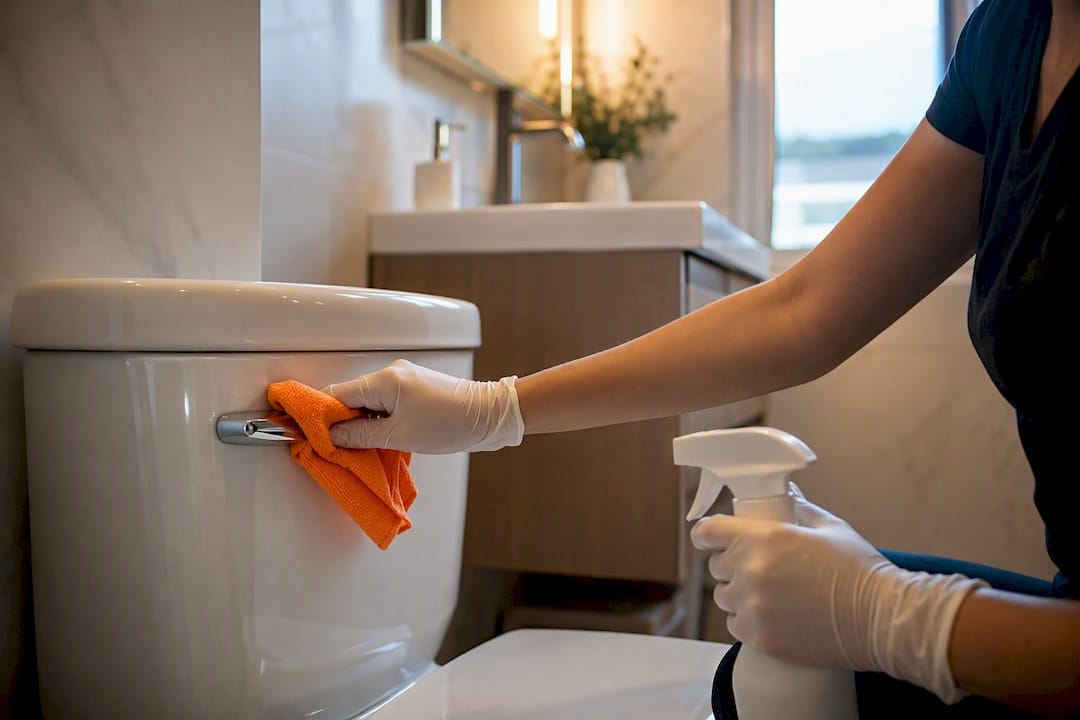
- Bathroom. Disinfect the toilet flush handle, faucet handles, light switch, and cabinet pulls. Empty and reline the waste bin, and wipe the bin’s lid and pedal too.
- Kitchen. Hit counters, the fridge and microwave door handles, kettle and coffee maker buttons, and any shared cups or utensils that went unwashed during the sick days.
- Living room and shared spaces. Wipe remote controls, light switches, tabletops, and door handles. Vacuum upholstery, and steam clean cushions or throws if the person spent a lot of time on the couch.
- Fabric extras. Launder throws and removable cushion covers on the hottest setting the fabric tolerates.
- Kids’ items. Wash hard plastic toys with soap and water or a wipe. Launder soft plush toys if the tag allows machine washing; if not, seal them in a bag for 72 hours before returning them to play.
Working room to room this way, instead of jumping between surfaces, means you never miss a high-touch point that the whole household still uses daily. Geisinger’s guidance backs the same sequence: bedding and linens first, shared touchpoints second, then a final pass on soft furnishings.
Cleaning first, then disinfecting: the exact method
Cleaning and disinfecting are two different jobs, and doing them in the wrong order wastes your effort. Cleaning removes visible soil, oils, and organic debris with soap or detergent. Disinfecting kills the virus itself, but it can’t do that properly through a layer of grime. The CDC is blunt about this: wash the surface with soap and water first, then apply a disinfectant to the same spot.
For bleach, the CDC’s dilution recipe is precise:
- Small jobs: 1 tablespoon of 5.25% bleach per quart (4 cups) of water
- Larger areas: 1/4 cup of bleach per 1 gallon of water
- Contact time: leave the surface visibly wet for 3 to 5 minutes before wiping or rinsing
You don’t need a specialty disinfectant for this. A peer-reviewed PLOS One study tested household staples against live influenza A virus and found that a 1% bleach solution, 10% malt vinegar, and even a 0.01% dilution of ordinary dish soap all rapidly knocked the virus below detectable levels in lab conditions. That’s a genuinely useful finding for anyone standing in their kitchen without a bottle of commercial disinfectant on hand.
Safety matters here as much as the recipe. Wear gloves, and add eye protection if you’re mixing bleach solutions from concentrate. Never combine bleach with ammonia or vinegar; the fumes are dangerous. Open a window while you work, and toss used wipes and paper towels into a lined bin rather than leaving them on counters.
Pro Tip: Disinfectant only works while the surface stays wet. Spray or wipe on enough solution to cover the area fully, and resist the urge to buff it dry right away, otherwise you’re just cleaning, not disinfecting.
Laundering bedding, towels, and soft furnishings
Wash sheets, pillowcases, towels, and any clothing the sick person wore in the warmest water the fabric label allows, then dry completely. Heat does most of the work here, more than any detergent additive.
- Don’t shake dirty laundry before loading it; that aerosolizes anything clinging to the fabric.
- Wear gloves if the laundry is visibly soiled, and wash your hands afterward regardless.
- Washable stuffed animals: place in a mesh laundry bag and wash on a gentle cycle.
- Non-washable plush toys: wipe down surfaces you can reach, or seal in a bag for 72 hours as a safer default.
- Vacuum carpets and upholstery with a HEPA-filter vacuum, then consider a steam clean for a deeper pass. Steam kills pathogens without leaving chemical residue, but test a hidden patch of fabric first for colourfastness.
Cleaning phones, remotes, and toys safely
Electronics get handled constantly during a sick week, which makes them one of the easiest ways the flu circles back through a household.
- Power down and unplug devices before cleaning.
- Use a 70% isopropyl alcohol wipe or a manufacturer-approved cleaner; avoid letting liquid pool near ports or seams.
- Wipe remotes and game controllers thoroughly, then let them sit for the wipe’s stated contact time before anyone picks them back up.
- Hard plastic toys can be disinfected directly; smaller ones that can’t tolerate bleach do fine with plain soap and water.
Airing out rooms and disposing of waste properly
Open windows and run a fan while you clean to push stale, virus-laden air out and bring fresh air in. If your HVAC system has a higher fan setting, use it during the cleaning window.
- Keep a lined, no-touch bin within reach of the sickroom for used tissues.
- Remove trash daily, and double-bag anything heavily soiled before it leaves the house.
- Skip fogging or spraying disinfectant into the air; it does little against surface-bound virus and can irritate airways.
- Remove gloves carefully, then wash your hands for a full 20 seconds before touching anything else.
When to call in a professional cleaning crew
Some situations call for more than a solo afternoon with a spray bottle and a mesh laundry bag.
- Multiple vulnerable people share the home (an elderly parent, an infant, someone immunocompromised).
- The illness lasted long enough that soiling has spread well beyond one bedroom.
- You’re still recovering yourself and don’t have the energy or mobility for a thorough pass.
- The job calls for steam or HEPA equipment you don’t own.
A professional post-illness clean typically covers focused disinfection of every high-touch surface, proper linen handling, upholstery steaming, and a written report of what was done.
Households booking Atelier Maids after an illness get a dedicated crew that already knows the home’s layout, flat pricing with no surprise add-ons, a service report after the visit, and insured, background-checked cleaners backed by a 100% satisfaction guarantee.
If you’d rather hand off the deep clean than do it yourself, that’s a reasonable call, not a failure of effort.
Cleaning for elderly parents and young children after the flu
Vulnerable household members need a stricter version of the same routine, not a different one. Older adults and young kids clear infections more slowly, and their immune response to a second exposure is often weaker, so the margin for error in a shared home shrinks fast.
For a household with an elderly parent, prioritize their bedroom and bathroom in the very first cleaning pass, not last. Disinfect grab bars, walker or wheelchair handles, and call-button surfaces daily during recovery, not just once. If they use a shared bathroom, wipe the toilet seat and flush handle after every use during the sick period, not only during the post-flu clean.
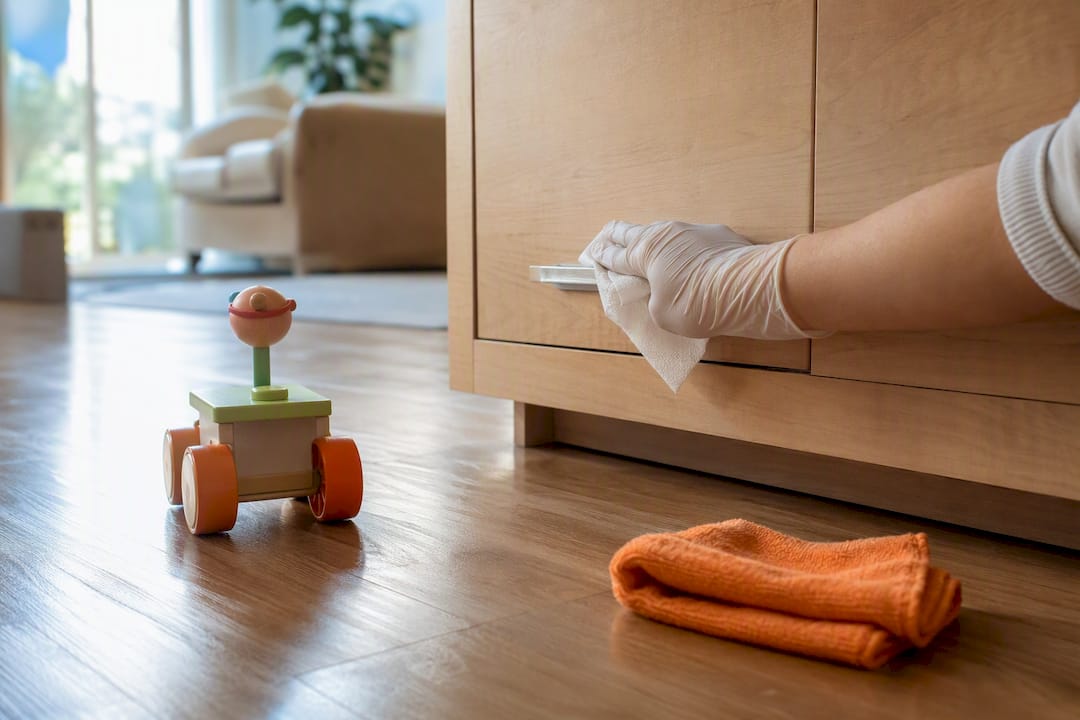
With young children, focus on floor-level surfaces they crawl or crawl near: baseboards, low cabinet handles, and any toys that ended up on the sickroom floor. Soft toys that can’t be laundered should sit in quarantine for the full 72 hours rather than being handed back early out of convenience. High chairs and feeding surfaces need the same clean-then-disinfect sequence as kitchen counters, since food contact surfaces get a lot of hand contact from small, unwashed hands.
In both cases, isolate dedicated cups, utensils, and towels for the sick person while symptoms are active. That single step, containment during illness, cuts down how much cleaning you’re left with once everyone’s better.
What actually matters most in this checklist
Most advice on cleaning after flu treats disinfectant choice as the hardest decision in the process. It isn’t. The science is more forgiving than that: the PLOS One findings show ordinary dish soap at a tiny concentration knocked out live influenza A virus in testing, right alongside bleach and vinegar. The product matters far less than whether you cleaned the surface before disinfecting it at all.
Where households actually go wrong is skipping the boring steps: not letting bleach solution sit wet for the full contact window, shaking dirty sheets instead of bagging them, or disinfecting once and calling it done instead of keeping isolation measures going while someone is still symptomatic. Timing gets ignored too. Deep cleaning schedules that work show that deep cleaning on day one of a fever wastes effort you’ll need to repeat.
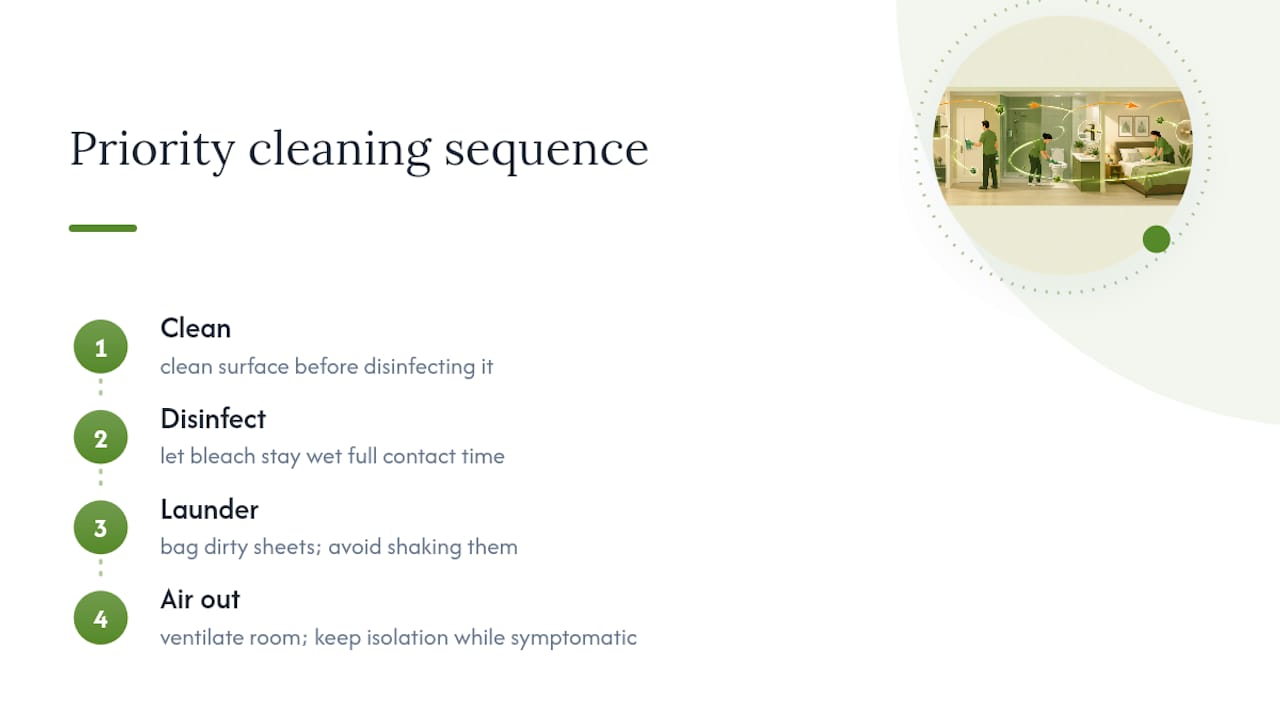
Prioritize sequence over products: clean, then disinfect, then launder, then air out the room. Get that order right and the specific bottle in your hand matters far less than most guides suggest.
— Atelier
Book a post-flu clean with Atelier Maids
Atelier Maids gets your home back to a genuinely clean baseline after illness, without you spending a sick day’s worth of energy on baseboards and bleach dilution math. The difference from doing it yourself is straightforward: a dedicated crew that learns your home’s layout, flat pricing with no line-item surprises, and a written service report after every visit so you know exactly what got disinfected and what didn’t.
That matters most right after a flu goes through a house, when the last thing anyone wants is to spend a free afternoon scrubbing doorknobs. If your household includes an elderly parent or young kids, house cleaning with a focused disinfection pass is worth booking directly rather than squeezing it in yourself. Check pricing or browse the full cleaning services list to get a flat quote for your space today.
This article is general information, not a substitute for advice from a qualified doctor. Consult a qualified healthcare professional about your own circumstances before acting on anything here.
Sources
- Household cleaning agents rapidly inactivate influenza A virus (PLOS One)
- When and how to clean and disinfect your home | CDC
- How to disinfect your space after flu, strep or other illnesses | Geisinger