
A house cleaning checklist that actually keeps your home clean
A house cleaning checklist that actually keeps your home clean
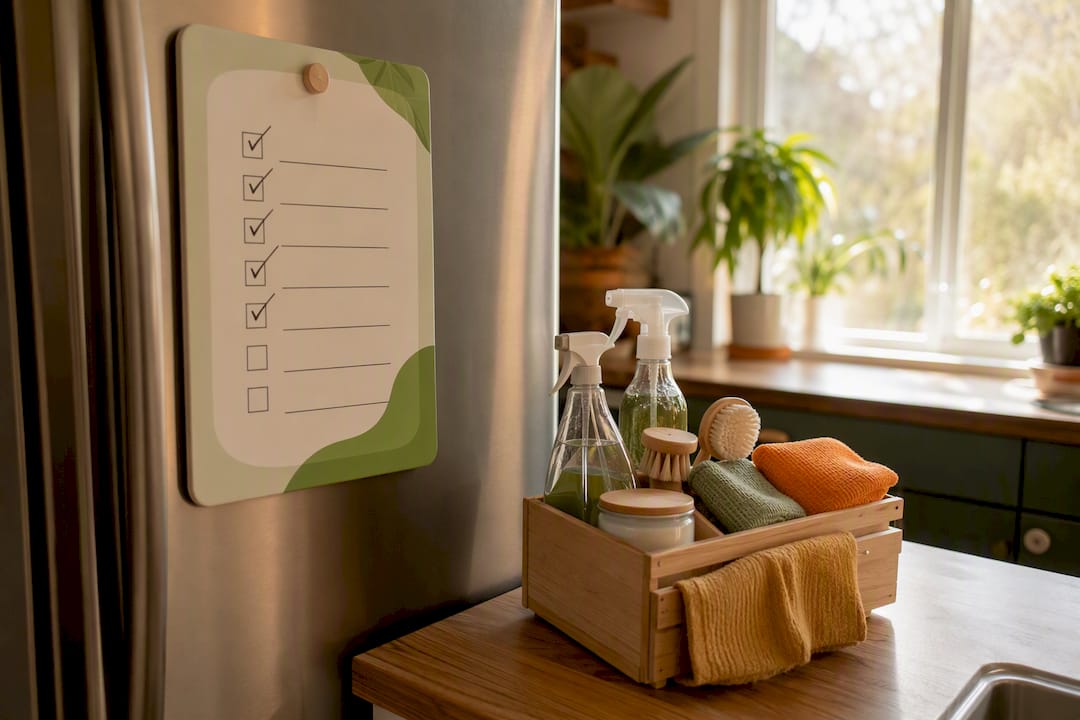
Use a printable, frequency-based, room-by-room house cleaning checklist to keep your home consistently clean with minimal time each week. It works better than a single giant “clean the house” list because it sorts tasks by how often they need doing, so you’re never tackling everything at once.
Here’s what to grab or build right now:
- A one-page weekly checklist for the recurring basics
- Separate room sheets for kitchen, bathroom, bedroom, and living areas
- A rotating monthly or seasonal list for deep-clean jobs like ovens, vents, and baseboards
Print the one-page weekly sheet first. It’s the piece that does most of the work.
Key Takeaways
A frequency-based, room-by-room checklist keeps cleaning manageable because it spreads deep tasks across weeks instead of piling them onto one exhausting day.
| Point | Details |
|---|---|
| Sort by frequency | Split tasks into daily, weekly, and monthly/seasonal buckets to avoid doing everything at once. |
| Follow the room sheets | Kitchen, bathroom, bedroom, living room, entry, and laundry each need their own short checklist. |
| Rotate deep-clean jobs | Tackle one deep-clean category or room per week or weekend instead of batching them all together. |
| Clean top-to-bottom, dry-to-wet | This order stops re-soiling floors and keeps dust from smearing into grime. |
| Hire when the backlog is too big | Atelier Maids assigns a dedicated crew and provides service reports for recurring or one-off deep cleans. |
Table of Contents
- What is standard cleaning, and how often should each task happen?
- Room-by-room house cleaning checklist
- Deep-clean checklist and a rotation that won’t wear you out
- Supplies and tools worth keeping on hand
- Cleaning order: top-to-bottom, dry-to-wet, one room at a time
- Printable templates and how to make them yours
- How professionals structure cleaning visits, and when it’s worth hiring one
- Let Atelier Maids handle the checklist for you
- Frequently asked questions
- Sources
What is standard cleaning, and how often should each task happen?
Standard cleaning covers the tasks that keep a home presentable week to week: wiping counters, vacuuming, scrubbing the bathroom, doing laundry. Deep cleaning goes further, targeting spots people forget, like inside the fridge, behind appliances, or window tracks caked with a season’s worth of grime. A basic house cleaning list mixes both, but sorted correctly, so you’re not doing deep-clean work every single week.
Break every task into one of three buckets:
- Daily — Quick resets, about 10 minutes: wipe down counters, load the dishwasher, do a fast tidy of high-traffic surfaces.
- Weekly — The pass that catches most dirt: vacuuming, a full bathroom clean, laundry, mopping floors.
- Monthly or seasonal — Deeper jobs that don’t need weekly attention: oven interior, vents, curtains, baseboards, window washing.
This structure mirrors how Martha Stewart’s home cleaning schedule recommends splitting tasks, and it’s the reason cleaning sessions stay short instead of ballooning into half-day marathons.
A simple weekly template looks like this: Monday, dust; Tuesday, vacuum; Wednesday, kitchen deep wipe; Thursday, bathrooms; Friday, bedding and linens; Saturday, flex day for whatever slipped; Sunday, rest.
Pairing a 10-minute daily reset with one focused weekly task keeps total cleaning time predictable instead of unpredictable, according to the same Martha Stewart scheduling guide. That’s the whole trick: small, frequent effort beats occasional big pushes.
Room-by-room house cleaning checklist
A standard house cleaning checklist only works if it’s specific enough to act on immediately. Here’s what belongs in each room.
Kitchen
- Wipe counters and backsplash
- Clean the sink and disinfect the faucet handle
- Wipe the stovetop and appliance fronts
- Spot-clean the fridge exterior and door handles
- Sweep and mop the floor
- Take out the trash
Bathroom
- Sanitize high-touch spots: taps, light switches, door handles
- Scrub the shower or tub
- Clean the mirror and wipe down the vanity
- Spot-treat grout as needed
- Mop the floor
- Empty the bin
Bedroom
- Make the bed
- Dust surfaces, including nightstands and dressers
- Vacuum or mop the floor
- Change sheets weekly
- Tidy closets when they start overflowing
Living room
- Dust all surfaces, including shelves and picture frames
- Vacuum upholstery
- Declutter magazines, cups, and stray items
- Wipe down electronics and remotes
- Vacuum or mop the floor
Entry and hallway
- Straighten shoes and shake out mats
- Wipe door handles
- Sweep or vacuum
- Sort the mail pile before it becomes a landslide
Laundry
- Run and switch loads on schedule
- Wipe down the washer and dryer exteriors
- Empty the lint trap
- Mop the floor
Extras (lower frequency, but easy to forget): baseboards monthly, vents every two to three months, window sills monthly, behind and under appliances seasonally.
Pro Tip: Keep a small dry-erase or printed room sheet taped inside a cupboard in each area. You’ll tick boxes as you go instead of relying on memory, and physically checking something off is what actually gets it finished.
Deep-clean checklist and a rotation that won’t wear you out
Deep cleaning covers what a weekly pass skips entirely: the oven interior, fridge shelves and drawers, curtain washing, baseboards, vents, upholstery, and carpet shampooing. Trying to do all of it in one weekend is how people burn out on cleaning altogether. Room-by-room deep-clean checklists including commonly missed spots like vents, baseboards, and behind appliances separate a quick tidy from an actual deep clean.
Spread these tasks instead of stacking them:
- Assign one deep-clean category per week or one room per weekend, rotating through the full list across a month or a season.
- Declutter a space before deep cleaning it. Cleaning around clutter wastes time and rarely looks finished.
- Time-block deep-clean sessions. A 45-minute window with a clear target (just the oven, just the baseboards) gets more done than an open-ended “clean the kitchen” afternoon.
- Split tasks with household members, or bring in a professional for the jobs that eat a whole day, like carpet shampooing or window washing on a two-storey home.
Breaking large deep-clean tasks across multiple sessions reduces fatigue and improves the odds you actually finish, which is the entire logic behind rotating instead of binging.
Supplies and tools worth keeping on hand
A pared-down supply kit beats a cluttered cabinet of half-used products. Stock these basics: microfibre cloths, a multi-surface cleaner, a degreaser for the kitchen, toilet cleaner, a couple of scrub brushes, a broom, a vacuum, a mop, and trash bags.
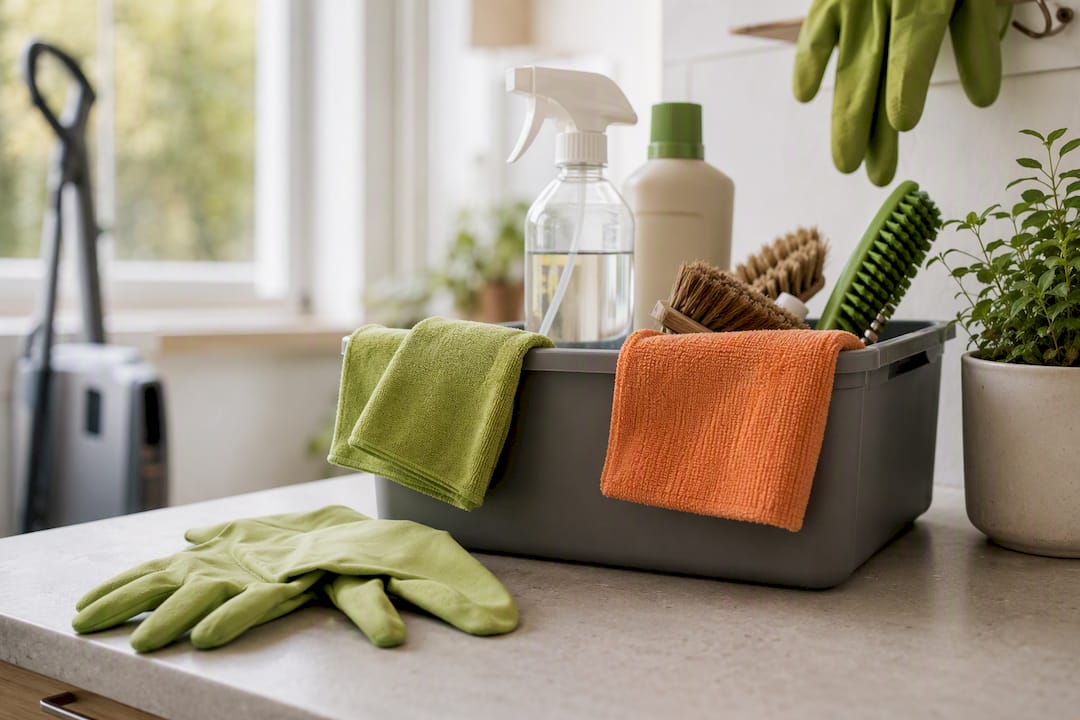
Beyond the basics, a few upgrades genuinely save time. An extendable duster handles ceiling fans and high shelves without dragging out a step stool. A cordless vacuum makes the daily 10-minute reset faster because there’s no cord to untangle. A steam cleaner is worth it mainly for grout and stovetops, but it’s optional for most households.
Keep a compact “daily kit,” just a cloth, a spray bottle, and a small brush, somewhere accessible so quick resets don’t require a trip to the cleaning closet every time.
Cleaning order: top-to-bottom, dry-to-wet, one room at a time
Cleaning in the wrong order means redoing work. Dust falls, so start high and work down: ceiling fans and shelves before counters, counters before floors. Otherwise you’ll re-dirty a floor you already mopped. Cleaning dry surfaces before wet ones matters too, since dry dusting first stops loose debris from turning into a smeared mess once cleaner and water hit the surface.
Finish one room completely before starting the next, moving in a rough clockwise loop from the entrance. Jumping between rooms means retracing your steps and losing track of what’s actually done.
For shorter sessions, try the 20/10 method: 20 minutes of focused cleaning, then a 10-minute break, repeated until the list is done. It works well for deep cleaning without the whole day disappearing.
Pro Tip: Set a kitchen timer for a strict 20 minutes and don’t answer your phone. Most people finish far more in one uninterrupted block than in three interrupted hours.
Printable templates and how to make them yours
Three formats cover most households: a one-page weekly checklist, individual room sheets, and a rotating monthly deep-clean list. Print all three, or just start with the weekly page if that’s all you need.
Customise freely:
- Cut tasks that don’t apply, like carpet care in a home with hardwood throughout
- Add household-specific items, such as litter boxes, plant watering, or aquarium maintenance
- Adjust frequency to match your actual traffic, not a generic default
If paper isn’t your thing, an editable PDF or a task app with recurring reminders does the same job digitally, and it nags you automatically instead of relying on willpower.
How professionals structure cleaning visits, and when it’s worth hiring one
Professional cleaners run on the same logic as a good checklist, just executed by a trained crew. A dedicated crew assigned to your property learns its specific layout and quirks, follows a set frequency schedule, and produces a service report after each visit so nothing gets skipped or forgotten.
Hiring makes sense for large deep-cleans, tight schedules, or ongoing maintenance you’d rather not manage yourself.
Let Atelier Maids handle the checklist for you
Following your own room-by-room checklist works, but it takes discipline every single week. If your calendar doesn’t have room for that, Atelier Maids delivers the same outcome without you lifting a mop. A dedicated crew learns your home’s specific layout, follows flat pricing with no surprise add-ons, and leaves a service report after every visit so you know exactly what got done.

If your list leans toward the daily-reset side, a recurring house cleaning plan matches that pace. If you’re staring down a backlog of baseboards, vents, and behind-the-fridge grime, book a one-off deep clean through Atelier Maids’ cleaning services and reset the whole rotation in a single visit.
Frequently asked questions
What is included in a standard house cleaning? Standard cleaning covers counters, floors, bathrooms, dusting, and laundry, the recurring tasks that keep a home presentable. It doesn’t include deep-clean jobs like oven interiors or window tracks.
What’s the difference between standard and deep cleaning? Standard cleaning happens weekly and hits visible, high-traffic areas. Deep cleaning targets overlooked spots, vents, baseboards, behind appliances, and typically happens monthly or seasonally.
How do I make a house cleaning checklist that I’ll actually stick to? Start with a printable, frequency-based template: daily resets, one weekly pass, and a rotating monthly deep-clean list. Ticking boxes on paper or a task app builds momentum better than a mental to-do list.
What should an open house cleaning checklist include? Prioritize surfaces buyers notice immediately: floors, windows, bathrooms, and kitchen counters, plus decluttering. It’s essentially a compressed deep clean focused on first impressions rather than every hidden spot.
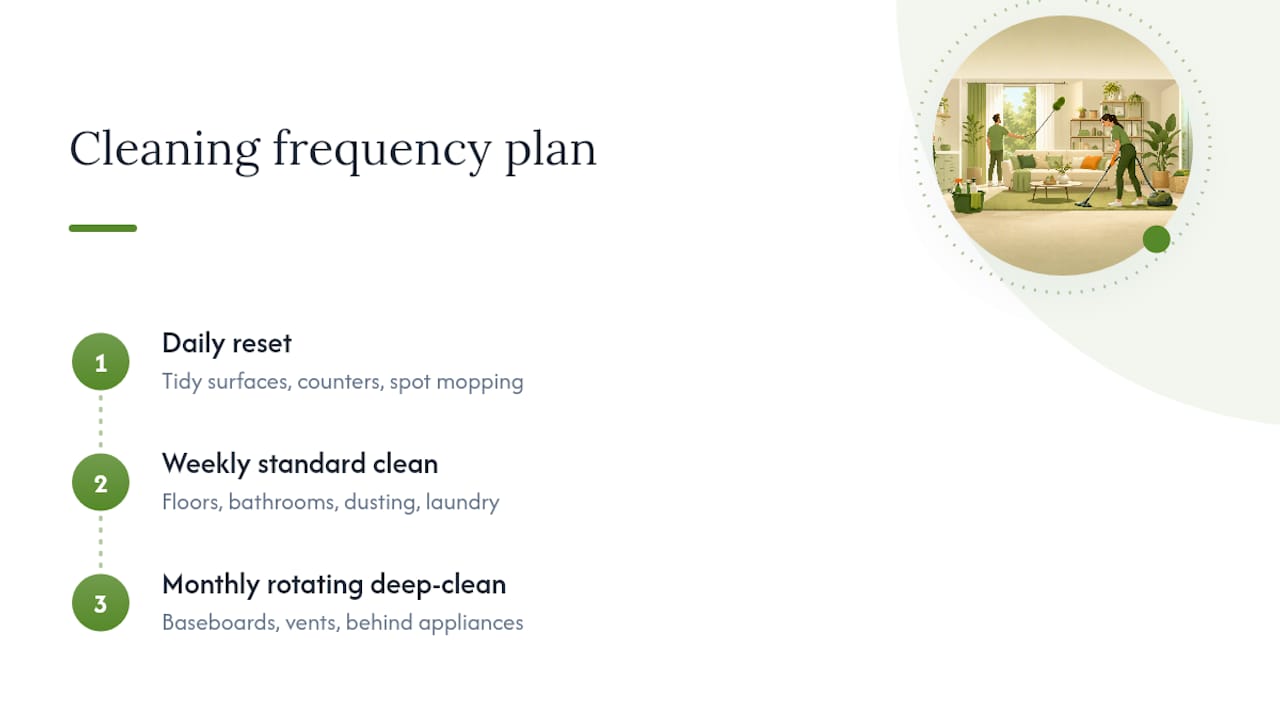
How often should I deep clean my house? Most households do well rotating one or two deep-clean categories per month rather than one massive seasonal push, which keeps the workload from ever piling up.
Sources
- Your Complete Home Cleaning Schedule: What to Clean Weekly, Monthly, and Seasonally
- The Ultimate House Cleaning Checklist: Daily, Weekly & Deep Clean Guide